



Introduction. Balancing classes in World of Warcraft is one of Blizzard’s most intricate design challenges. With dozens of specs, abilities, and systems layered across expansions, maintaining both fairness and fantasy seems almost impossible. Yet, somehow, each class continues to feel distinct while remaining viable across raids, PvP, and dungeons. Blizzard’s success lies in its philosophy of dynamic equilibrium—a design approach that embraces constant adjustment without sacrificing identity.
Balance isn’t a destination—it’s a conversation between math, feel, and imagination.
This article explores how Blizzard achieves this balance, the philosophies guiding their class design, and why preserving flavor is as important as maintaining fairness.
The Philosophy Behind Class Balance
Blizzard’s approach to balance isn’t about numerical equality—it’s about meaningful diversity. Every class must feel powerful in its own way, embodying a fantasy that’s emotionally satisfying while mechanically fair. Instead of forcing identical damage outputs or cooldowns, designers ensure each spec excels in different contexts. A Fire Mage dominates burst windows, while an Affliction Warlock thrives on endurance. These contrasts create ecosystem balance rather than statistical uniformity.

Regular tuning passes allow Blizzard to monitor player data and adjust performance in small increments. Yet behind every hotfix lies a creative choice: to protect the feeling of the class even when the numbers shift. It’s why a nerfed spec can still feel fun—because identity, not damage, defines satisfaction.
Data, Feedback, and the Human Touch
Class tuning is both art and science. Blizzard relies on mountains of combat data from live servers and PTR testing, but numbers alone can’t tell the whole story. Developer commentary and community feedback form an ongoing dialogue that shapes balance philosophy. Players highlight frustrations—rotations that feel clunky, cooldowns that misalign—and designers respond by rethinking flow rather than just adjusting output.
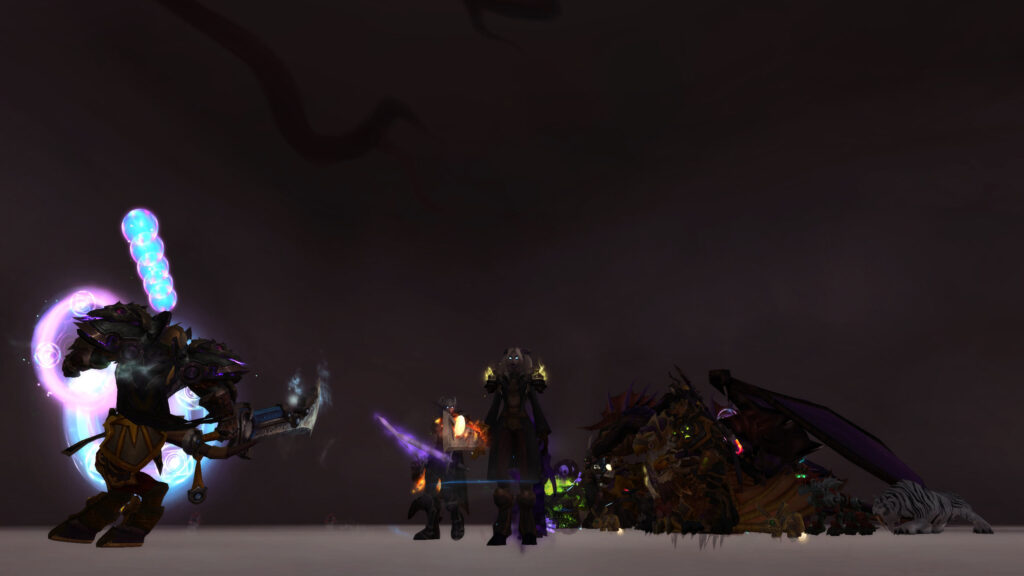
This iterative process ensures that each class not only performs well but feels right. Blizzard’s communication transparency, particularly in developer updates, builds trust between creators and players, transforming balance into collaboration rather than conflict.
Preserving Flavor Amid Change
One of Blizzard’s core principles is never to let balance erase identity. Each class represents an archetype—holy protector, agile assassin, primal shaman—and these themes anchor every redesign. When a spec underperforms, adjustments focus on reinforcing its essence rather than overwriting it. This is why class reworks often reintroduce signature abilities or iconic mechanics that reinforce fantasy, even when simplifying complexity.
By preserving visual and thematic flavor, Blizzard ensures that even mechanical parity doesn’t feel homogenized. Balance might demand refinement, but class fantasy guarantees heart. A Shadow Priest’s whispers or a Demon Hunter’s fury resonate far beyond their damage charts—they’re emotional languages players speak fluently.
| Aspect of Design | Goal | Approach | Example |
|---|---|---|---|
| Performance Balance | Ensure fairness across all roles | Numerical tuning and encounter scaling | Periodic DPS buffs or nerfs |
| Fantasy Preservation | Keep classes emotionally and thematically unique | Reintroduce iconic spells and motifs | Paladin auras, Druid shapeshifting |
| Player Feedback Loop | Refine balance through lived experience | PTR, forums, and data-driven dialogue | Warlock and Shadow Priest redesigns |
Adaptive Balance Through Seasons and Expansions
Blizzard treats balance as a living system that evolves with each patch and season. As raid encounters, PvP metas, and dungeon affixes shift, class tuning adapts accordingly. This ensures long-term vitality—keeping playstyles fresh without erasing mastery. Seasonal tuning also gives underrepresented classes their moment in the spotlight, maintaining rotation in relevance and creativity.

This adaptive philosophy ensures no class remains stagnant. Balance changes might frustrate some players, but they also reignite experimentation. The result is a perpetual rediscovery of familiar archetypes, keeping the meta—and the community—alive.
Conclusion
Balancing classes in WoW is not about perfection—it’s about harmony. Blizzard’s ongoing success lies in recognizing that numbers can be adjusted, but fantasy must be preserved.
By blending data with emotion and refinement with creativity, the developers maintain a living equilibrium where every class feels both fair and flavorful. In the end, balance isn’t about sameness—it’s about giving every player the power to feel extraordinary in their own unique way.
Leave a Reply